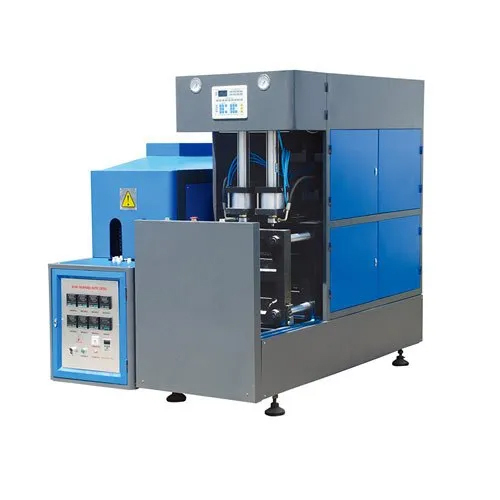
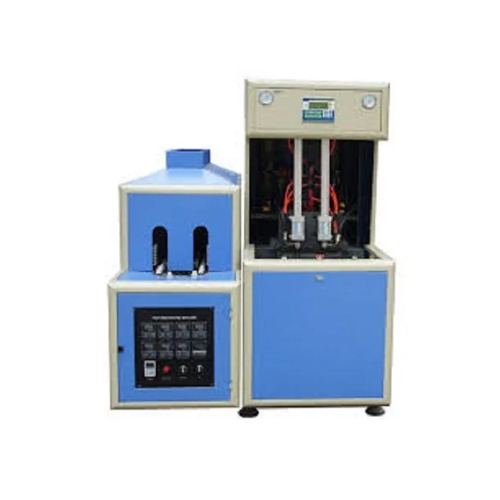
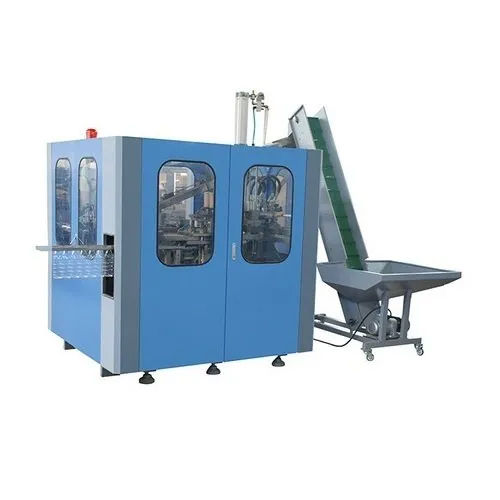
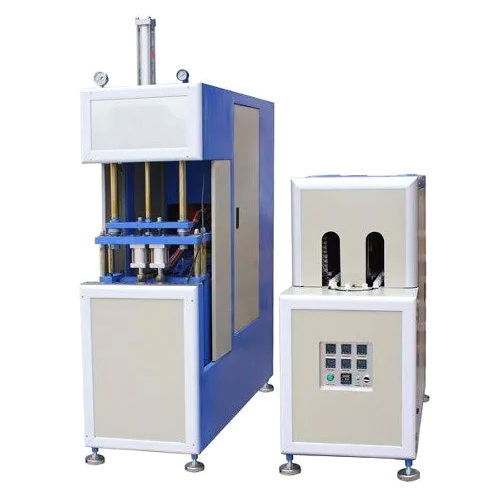
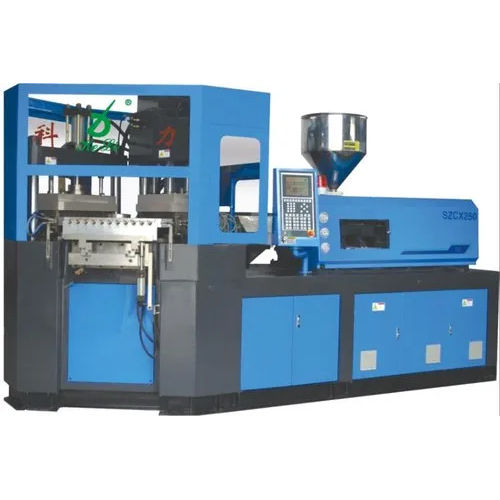
About Industrial Pet Blow Molding Machine
Key Components:
- Preform Feeding System: Automates the feeding of PET preforms into the machine.
- Heating System: Uniformly heats PET preforms to the optimal temperature for molding, typically between 160-180C.
- Blowing Station: Uses high-pressure air to shape the preform into the desired container shape within the mold.
- Molds: Determines the shape, size, and design of the final product, customizable for various applications.
- Cooling System: Ensures the molded containers solidify and retain their shape after blowing.
- Clamping Unit: Holds the mold in place during the injection process, ensuring precise and consistent bottle formation.
- Servo Motor Drives: Provides precise control over component movement, enhancing accuracy and reducing energy consumption.
Technical Specifications:
- Production Capacity: Varies depending on machine model and configuration, with theoretical production rates ranging from 600 to 2200 bottles per hour BPH
- Power Consumption: Typically ranges from 9-33 kW for heating, with additional power requirements for accessories like compressors and chillers.
- Machine Dimensions: Varies depending on model, with dimensions such as 57 x 22 x 90 inches for the blow machine and 68 x 24 x 48 inches for the conveyor.
- Mold Capacity: Single or multiple cavities, with mold plate widths ranging from 280 mm to accommodate various container sizes
Features and Benefits:
- High-Speed Production: Enables rapid production with minimal cycle time and low rejection rates.
- Energy Efficiency: Incorporates advanced technologies to reduce energy consumption and operational costs.
- Precision Control: Ensures consistent bottle quality with precise temperature control, air pressure monitoring, and servo-driven systems.
- Sustainability: Supports eco-friendly packaging trends with 100 recyclable PET materials and reduced material waste

 Send Inquiry



 Send Inquiry

 Send Inquiry